Emergency Water Damage Restoration in Perth: What To Do Immediately After Flooding
Flooding can strike without warning. A burst pipe in the early hours of the morning, an overflowing appliance, a storm that overwhelms drainage systems, whatever the cause, the result is the same: water where it shouldn't be, spreading fast and causing damage by the minute. For Perth homeowners and business owners, knowing how to respond in those first critical hours is not just useful, it can mean the difference between a recoverable situation and a costly, drawn-out disaster.
See below the topics that will be covered in this blog post about "Emergency Water Damage Restoration in Perth: What To Do Immediately After Flooding":
- What should I do in the first hour after flooding in my Perth home?
- How quickly does water damage need to be treated to prevent mould growth?
- When do I need professional emergency water damage restoration rather than handling it myself?
- What does emergency water damage restoration in Perth actually involve?
- Does home insurance in Western Australia cover flood and water damage restoration?
- Can water-damaged carpets be saved, or do they need to be replaced?
- How long does water damage restoration take in a Perth home?
- How do I choose a reliable emergency water damage restoration company in Perth?
- Conclusion
The answers to every question above are covered in full below, including what professional restoration actually involves, what your insurance may and may not cover, and whether your carpets can be saved. Keep reading.
What Should I Do in the First Hour After Flooding in My Perth Home?
The first sixty minutes after a flooding event are the most important. Water moves quickly through porous materials, carpet, underlay, skirting boards, wall cavities, and the longer it sits, the more damage it causes and the harder it becomes to reverse. Acting fast and systematically in that first hour limits the damage considerably.
Stop the source if it is safe to do so. If the flooding is caused by a burst pipe, appliance overflow, or internal plumbing failure, turn off the water supply at the mains. Do not attempt to approach the area if there is any risk of electrical hazard, water and live electricity are a potentially fatal combination. If you are unsure whether power circuits in the affected area are safe, turn off the electricity at the switchboard before entering.
Document everything before you touch it. Once it is safe to enter the space, take photos and video footage of all affected areas. Photograph waterlines on walls, saturated flooring, damaged furniture, and any visible structural effects. This documentation is critical for insurance claims and for giving restoration professionals a clear picture of the event's scope.
Remove standing water where possible. If you have a wet/dry vacuum, use it to extract as much surface water as you can from hard floors and carpet. Towels and mops can help with smaller areas. The goal at this stage is not a thorough clean, it is simply to reduce the volume of water that continues to saturate materials.
Move furnishings off wet carpet. Furniture sitting on waterlogged carpet transfers tannins and dyes into the fibres, causing permanent staining. Lift chairs, tables, and sofas off the carpet and place them in a dry area. If the furniture is too heavy to move, slip aluminium foil or plastic sheeting underneath the legs.
Open windows and doors to promote airflow, but only if outdoor humidity is lower than indoor humidity. In Perth's climate, this is generally safe during dry months. Avoid using standard household fans to blow air directly over saturated carpet, this can spread moisture into adjoining rooms and walls rather than removing it.
Call a professional emergency water damage restoration team in Perth. This is not a step to leave until morning. Perth Local Carpet Cleaning provides 24/7 emergency water damage restoration in Perth, with rapid response times across the metropolitan area, including Perth CBD, Osborne Park, Joondalup, Fremantle, and surrounding suburbs. The sooner a professional team begins extraction and drying, the better your chances of salvaging flooring, underlay, and the structural elements beneath.
How Quickly Does Water Damage Need to Be Treated to Prevent Mould Growth?
The timeline for mould development after a flooding event is shorter than most people expect. Under the right conditions, warmth, moisture, and an organic material to feed on, mould spores can begin to colonise within 24 to 48 hours of initial water exposure. In Perth's warmer months, that window can be even tighter.
This is why emergency water damage restoration in Perth cannot wait. Every hour of delay allows water to penetrate deeper into subfloor materials, wall cavities, and the carpet underlay beneath your feet. By the time mould becomes visible on a surface, it has typically already established growth within the materials below.
The stages of water damage deterioration follow a predictable pattern:
- Within 1–2 hours: Water spreads across flooring and begins absorbing into carpet underlay and skirting boards. Drywall starts to absorb moisture at the base.
- Within 24 hours: Mould spores present in the environment begin to activate and adhere to damp surfaces. Swelling of timber subfloor boards may become noticeable.
- Within 48–72 hours: Visible mould growth can appear on carpet, walls, and ceilings. Odours become detectable. Structural timber begins to warp.
- After one week: Mould colonies are well established. Structural deterioration accelerates. The cost and complexity of remediation increases substantially.
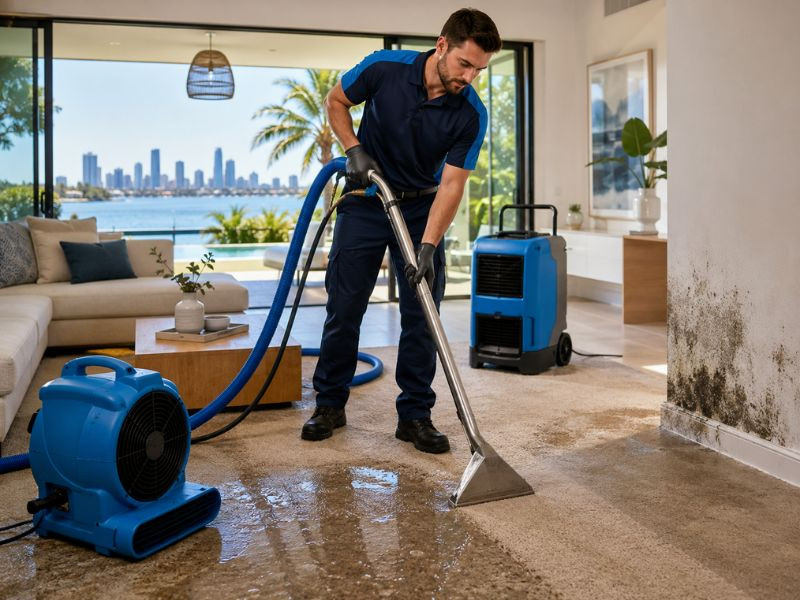
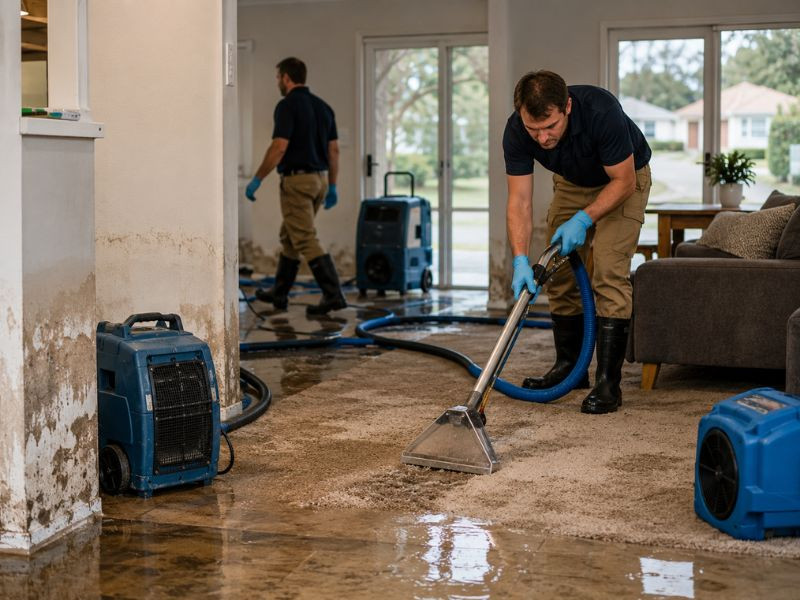
The practical implication is clear: flood cleanup in Perth needs to begin within hours, not days. Professional restoration teams use industrial-grade air movers, dehumidifiers, and moisture meters to extract water and reduce ambient humidity to levels that prevent mould from taking hold. This is not achievable with domestic equipment, a standard household fan and dehumidifier will not dry out saturated carpet underlay and subfloor materials within the critical window.
For Perth properties in suburbs like Scarborough, Victoria Park, Cottesloe, and Hillarys, where the combination of older housing stock and Perth's variable weather can create particularly vulnerable conditions, early professional intervention is especially important. If you suspect mould has already begun to develop following a flooding event, contact a professional team immediately, remediation at an early stage is significantly less invasive and less expensive than dealing with an established mould problem later.
When Do I Need Professional Emergency Water Damage Restoration Rather Than Handling It Myself?
There is a meaningful difference between a minor water spill and a flooding event, and the distinction matters when deciding whether to attempt self-management or call in professional help. Most homeowners can handle a small, contained leak, a knocked-over bucket, a minor appliance drip, with basic drying and vigilance. Anything beyond that warrants professional assessment, at a minimum.
You should call a professional emergency water damage restoration team in Perth immediately if any of the following apply:
- The source of water is a burst pipe, storm overflow, roof leak, or sewage-related event
- Water has spread across more than a single small room
- Carpet and underlay are saturated rather than merely damp on the surface
- The flooding has affected timber floorboards, built-in cabinetry, or skirting boards
- The property is a rental, strata, or commercial premises where liability and documentation are important
- Water has been present for more than a few hours before discovery
- You can detect any musty odour, which suggests mould has already begun
The risks of managing a significant water damage event without professional help are considerable. Inadequate drying leaves moisture in structural elements that causes ongoing damage long after the visible water has gone. Disturbing contaminated water without proper protective equipment poses genuine health risks. And incomplete remediation can void insurance claims if an assessor determines the damage was worsened by delayed or improper action.
Perth Local Carpet Cleaning's water damage restoration service is available around the clock and operates across the full Perth metropolitan area, from Malaga and Wangara in the north to Bibra Lake in the south, and across commercial precincts including Welshpool and Osborne Park. A professional assessment costs far less than the remediation work that becomes necessary when water damage is left too long.
What Does Emergency Water Damage Restoration in Perth Actually Involve?
When a professional team arrives to carry out emergency water damage restoration in Perth, the process is considerably more systematic than most people expect. It is not simply a matter of extracting water and leaving the rest to air dry. Proper flood damage restoration in Perth follows a structured methodology designed to address both visible and hidden moisture.
- Stage 1 - Assessment and moisture mapping: The team uses moisture meters and thermal imaging equipment to establish exactly where water has penetrated. This is often the most revealing part of the process, water travels in unexpected directions through cavities, under flooring, and behind walls, and mapping this spread is essential before any drying begins.
- Stage 2 - Water extraction: Industrial wet vacuums and truck-mounted extraction equipment remove the bulk of standing and absorbed water from carpets, underlay, and hard surfaces. Perth Local Carpet Cleaning's truck-mounted technology delivers significantly more extraction power than portable equipment, making this stage faster and more thorough.
- Stage 3 - Structural drying: Industrial air movers and commercial-grade dehumidifiers are positioned strategically throughout the affected area to create controlled airflow and reduce humidity to safe levels. This phase can take anywhere from two to five days depending on the extent of saturation and the materials involved. Moisture readings are taken at regular intervals to track progress.
- Stage 4 - Sanitisation and treatment: Water damage events, particularly those involving stormwater, roof leaks, or any water that has passed through soil or drainage systems, introduce contaminants and bacteria into surfaces. Antimicrobial treatments are applied to affected areas to prevent bacterial growth and eliminate odours.
- Stage 5 - Carpet and upholstery restoration: Once structural drying is complete, carpets that have been assessed as restorable undergo professional steam carpet cleaning in Perth to remove residual contamination, restore fibres, and eliminate any remaining odour. Upholstery cleaning is also carried out on affected soft furnishings where required.
- Stage 6 - Final inspection and reporting: A completion report with moisture readings and photographic documentation is provided, which is useful for insurance purposes and for confirming that the property has been restored to a safe, habitable condition.
Does Home Insurance in Western Australia Cover Flood and Water Damage Restoration?
This is one of the most common questions people have immediately after a flooding event, and the answer depends heavily on the specifics of your policy and the nature of the event. In Western Australia, home and contents insurance policies vary considerably in how they define and cover water damage, and the distinction between different types of water events matters enormously.
What is typically covered:
- Sudden and accidental internal water damage, such as a burst pipe, a ruptured hot water system, or a washing machine overflow
- Storm damage where water enters through a structurally compromised roof or windows
What is frequently excluded:
- Gradual water damage from a slow leak that was not reported or addressed promptly
- Flooding from external sources such as river overflow or storm surge (this is often defined separately as "flood" and may require a specific flood endorsement)
- Damage caused by poor maintenance or pre-existing structural issues
Practically speaking, the steps you take in the hours following a flooding event can affect your claim. Thorough photographic documentation, prompt professional intervention, and keeping receipts for all emergency work completed are all factors that strengthen an insurance claim. Insurers will often appoint their own assessor to inspect the damage, and having a detailed record of the event and the restoration work carried out works in your favour.
Can Water-Damaged Carpets Be Saved, or Do They Need to Be Replaced?
The question of whether to restore or replace water-damaged carpet is one of the most practically significant decisions in any flood damage restoration in Perth. The answer is not always straightforward, but there are clear factors that determine the outcome.
Carpets that can generally be restored:
- Carpets saturated by clean water (burst pipe, appliance overflow) that have been extracted and drying has commenced within the first 24–48 hours
- Carpets that show no visible mould growth and have not developed a persistent musty odour
- Carpets where the underlay has been removed promptly, underlay that remains wet for more than 24–48 hours almost always needs to be replaced, but the carpet itself may be salvageable
- Quality synthetic or wool-blend carpets that have structural integrity despite saturation
Carpets that typically need replacement:
- Carpets affected by contaminated water, sewage backflow, stormwater, or any water that has passed through soil, present a biohazard risk that cannot be adequately remediated through cleaning alone
- Carpets where mould growth is already visible or where the musty odour is deeply embedded in the fibres
- Carpets that have been wet for more than 72 hours without professional extraction
- Budget-grade carpet with a foam backing, which breaks down rapidly when saturated
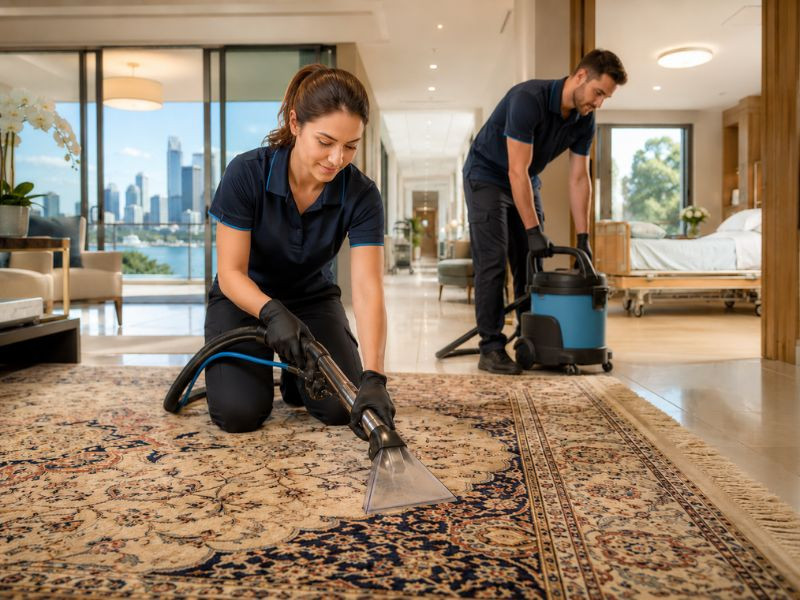
When restoration is viable, professional emergency carpet cleaning in Perth using hot water extraction is the most effective method for removing residual contamination, refreshing fibres, and eliminating odour. Perth Local Carpet Cleaning's truck-mounted steam carpet cleaning equipment provides the extraction power needed to reach deep into carpet fibres, something portable domestic machines cannot replicate. For carpets in properties across Subiaco, Cottesloe, Victoria Park, and Hillarys, professional assessment is always the recommended first step before a replacement decision is made.
Where carpet does need to be replaced, carpet maintenance advice from Perth Local Carpet Cleaning can help you make informed decisions about materials and protection going forward.
How Long Does Water Damage Restoration Take in a Perth Home?
There is no single answer to this question, because the duration of emergency water damage restoration in Perth depends on several interconnected variables: the volume of water involved, how long it was present before extraction began, the type of flooring and construction materials affected, and whether mould remediation is required.
That said, a general framework is useful for setting expectations:
- Minor flooding (contained to one room, clean water source, treated within hours): Professional extraction and structural drying typically takes two to four days. Carpet cleaning can generally be completed as part of the same visit or within 24 hours of drying completion.
- Moderate flooding (multiple rooms affected, water present for 12–24 hours before treatment): Full structural drying typically takes four to seven days. Moisture readings are used to confirm dryness before any restoration work on flooring or walls proceeds. Carpet assessment will determine restoration versus replacement on a room-by-room basis.
- Significant flooding (whole-of-property event, contaminated water, or extended time before discovery): Restoration timelines extend to ten days or more. Mould remediation, structural drying, subfloor treatment, and full water damage repair in Perth across affected areas are all required before the property is safe and habitable.
Throughout the restoration process, professional teams monitor moisture levels with calibrated meters, not by feel or visual inspection alone. Declaring a property "dry" based on surface appearance is a common mistake in DIY attempts. Structural timber and concrete slab foundations can retain significant moisture well after surface drying appears complete, and this residual moisture is a primary driver of mould growth and ongoing structural damage.
For commercial properties in Perth CBD, Joondalup, Wangara, Malaga, and Bibra Lake, minimising downtime is a major consideration. Perth Local Carpet Cleaning works efficiently and systematically to reduce the impact of water damage on business operations, and can coordinate restoration work around operational hours where the nature of the damage allows it.
How Do I Choose a Reliable Emergency Water Damage Restoration Company in Perth?
When flooding occurs, the pressure to act quickly can lead to hasty decisions about which company to call. The emergency water damage restoration industry in Perth includes operators of varying quality, and choosing the wrong one can mean inadequate drying, incomplete documentation, or work that does not meet the standard required for insurance purposes.
Here is what to look for when choosing a flood cleanup and water damage repair company in Perth:
- 24/7 availability with genuine rapid response: In a water damage situation, every hour matters. A company that offers emergency services but cannot dispatch a team promptly is not providing a true emergency response. Confirm response times before committing.
- Truck-mounted extraction equipment: The difference between truck-mounted and portable equipment is significant in terms of extraction power and drying efficiency. Companies operating truck-mounted units can extract more water faster and achieve better outcomes for saturated carpet and underlay.
- Transparent methodology: A reliable restoration company will explain the stages of their process, provide moisture readings at the start and end of work, and give you a completion report. This documentation matters for insurance claims and for your own records.
- Verifiable local reputation: Check customer reviews and look for consistent feedback about response times, professionalism, and outcomes. Local companies with an established presence in Perth's residential and commercial suburbs are more accountable than interstate operators or franchise networks with no genuine local base.
- Scope of services: Water damage restoration involves more than just extraction. A company that also provides professional carpet cleaning in Perth, upholstery cleaning, and structural drying under one roof streamlines the restoration process considerably and avoids the complexity of coordinating multiple contractors.
Perth Local Carpet Cleaning operates across the full Perth metropolitan area, from residential suburbs including Subiaco, Cottesloe, Scarborough, and Applecross, to commercial precincts including Osborne Park, Welshpool, Joondalup, and Perth CBD. Our team is available around the clock for emergency water damage restoration in Perth, and we bring the equipment, experience, and documentation standards that property owners and managers need when it matters most.
Conclusion
Perth Local Carpet Cleaning takes pride in delivering this content to you! In this blog post, you've read everything you need to know about "Emergency Water Damage Restoration in Perth: What To Do Immediately After Flooding". We covered what to do in the first hour after flooding in your Perth home, how quickly water damage needs to be treated to prevent mould growth, when professional emergency water damage restoration is necessary rather than a DIY approach, what emergency water damage restoration in Perth actually involves, how home insurance in Western Australia covers flood and water damage restoration, whether water-damaged carpets can be saved or need to be replaced, how long water damage restoration takes in a Perth home, and how to choose a reliable emergency water damage restoration company in Perth. Keep following the Perth Local Carpet Cleaning blog for more tips and updates.
Content developed by Perth Local Carpet Cleaning.
When flooding strikes, the decisions you make in the first few hours determine how much damage your property sustains and how quickly it can be restored. Perth Local Carpet Cleaning provides professional emergency water damage restoration in Perth, with 24/7 availability, truck-mounted extraction equipment, and a complete restoration process from initial assessment through to carpet cleaning and final inspection. We service the full metropolitan area, including South Perth, Mount Lawley, Fremantle, Victoria Park, Hillarys, Bibra Lake, Wangara, and beyond. If your property has been affected by flooding or water damage, do not wait: contact our team to arrange an emergency response today.